 PortfolioMarksExplorePricing
A card's worth is one number. What you paid, what you hold, and what you have actually made is the ledger, and that is what PullBinder keeps: cost, holdings, and the gains you have actually taken, at the same accounting standard a brokerage runs on, from one card to ten thousand.
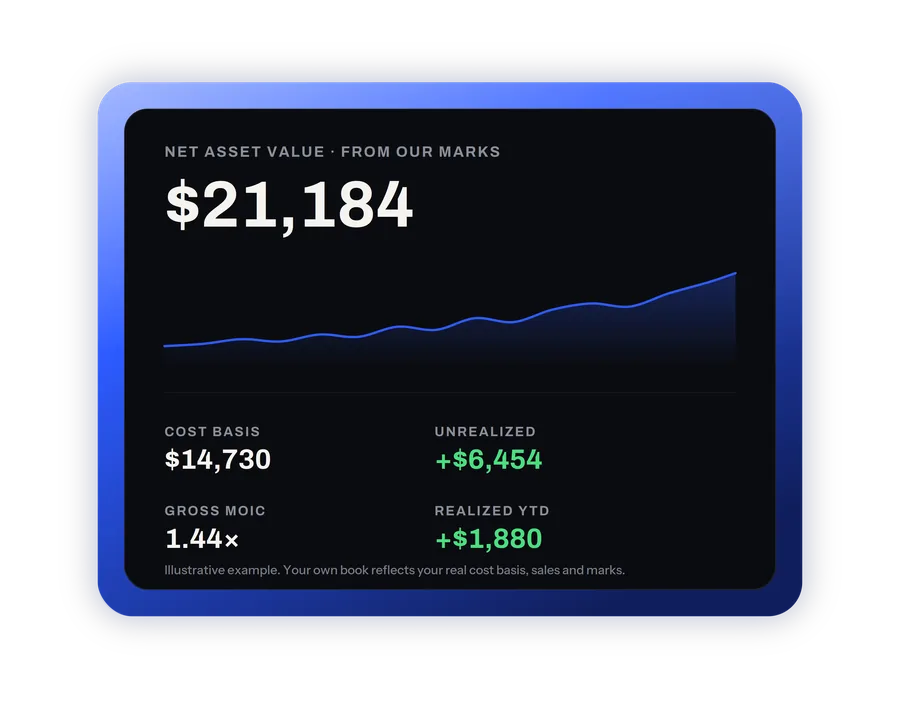
What you paid, and when. Enter it once as you add a card, or import a decade of receipts in a single file, including a PSA export. Every card carries its own purchase price and date, so the gain is measured from what you actually spent, not from zero.
Sell a card and you say which copy went: the exact one, with its own cost and its own date. Ten raw Snorlax are not ten of the same thing, so we don't pick one for you. The sale is booked as a realized gain against that copy, not quietly deleted from your total. A sale is a booked event with a number on it, and the ledger keeps it.
Every mark carries the date it was taken, and a stale mark shows its age. When we improve the method, the history stands. It is durable by design.
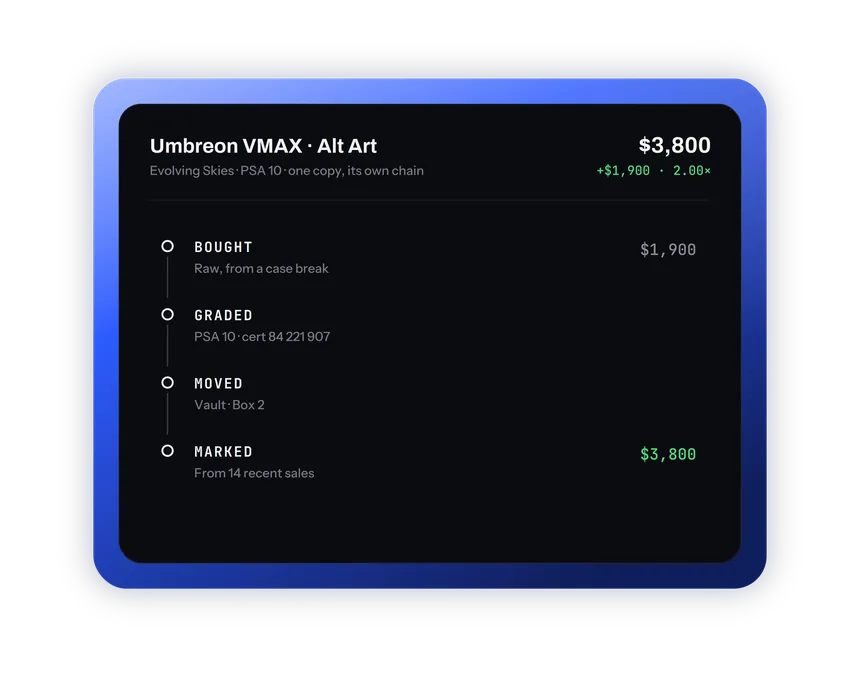
Select forty copies and put them in a place in one pass, down to the page and the slot. Or just tell Page.
When we can't price a card, we don't quietly value it at $0 and drag your total down. We exclude it and count the exclusion, so every total is built only from marks we can stand behind. A card we can't price is not a card worth nothing.
Your ledger is yours. Bring it in and take it out whenever you like. Import a CSV, including a PSA export, Every row is resolved to a card, flagged where we are unsure, and the whole batch stays reversible. Export it all back out the same way.
No credit card · your data is always exportable